


Aave Governance Split: Dueling Reports Ignite Debate
The Aave ecosystem finds itself in the midst of a heated governance dispute, underscored by the release of competing reports from the Aave Chan Initiative (ACI) and Aave Labs. This clash is centered on a proposed funding package, but it’s quickly ballooning into a larger debate regarding the protocol’s financial accountability, revenue distribution, and the very structure of its core operations.

The Core of the Conflict: Funding and Future Direction
At the heart of the disagreement lies the “Aave Will Win” framework, a proposal seeking approval from AAVE tokenholders. The proposal entails a substantial financial commitment – up to $42.5 million in stablecoins and 75,000 AAVE tokens – designed to fund Aave Labs‘ continued development and operational efforts. In return, Aave Labs would funnel all revenue from Aave-branded products directly to the Aave DAO treasury, establishing a DAO-funded operating model. However, the size of the request and the proposed revenue-sharing structure have triggered a wave of scrutiny.
ACI‘s Transparency Push: Questioning Past Funding and ROI
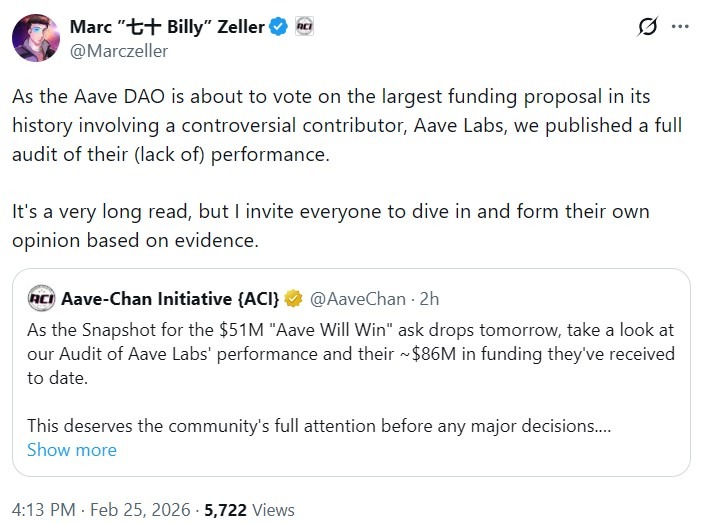
ACI, a service provider within the Aave ecosystem, spearheaded the release of a “transparency report.” This report scrutinized Aave Labs‘ historical funding, including its initial coin offering (ICO) proceeds, venture funding, and DAO payments, totaling approximately $86 million. ACI advocates for stricter evaluation criteria for future DAO grants, emphasizing measurable revenue impact and enhanced disclosure standards. They question whether governance votes should be decoupled to separate funding approvals, revenue alignment, and the ratification of Aave V4. Marc Zeller, the founder of ACI, has emphasized the need for funding decisions to be directly linked to performance metrics and transparent reporting.
Aave Labs‘ Defense: Highlighting Contributions and Building the Future
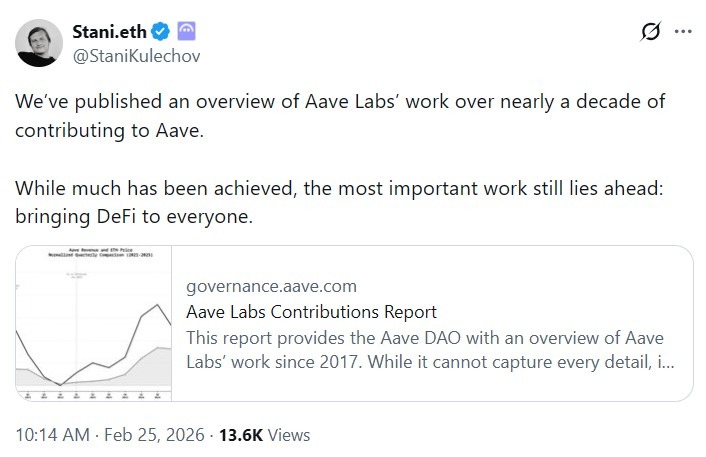
Aave Labs countered with its own report, highlighting its extensive contributions to the protocol since its inception in 2017. The report details Aave Labs‘ role in designing and implementing Aave V1, V2, and V3, and underscores the features that underpin the protocol’s current revenue model, including flash loans, the Safety Module, and Efficiency Mode. Aave Labs contends that focusing solely on governance proposals or forum posts fails to capture the full scope of research, development, security, and infrastructure work required to maintain a protocol used by millions. They are seeking validation and resources to further develop Aave and remain competitive in the fast-paced DeFi landscape.
Implications for the Aave Community
The unfolding governance battle raises critical questions about the future of Aave. Tokenholders are now tasked with evaluating the merits of each report and the potential ramifications of their votes. The outcome of the “Aave Will Win” proposal will directly impact Aave Labs‘ operational capacity and the structure of its future revenue streams. Furthermore, the debate sheds light on the broader need for increased transparency and accountability within decentralized autonomous organizations. The community will be closely watching how these issues are resolved, as they set a precedent for future governance discussions and funding decisions.
- Increased Scrutiny: The dispute highlights the growing importance of community oversight in DeFi.
- Potential Delays: The vote could be delayed or significantly altered, depending on how community sentiments shift.
- Evolving Governance: Expect a push for more transparent and efficient governance models.
The resolution of this governance dispute will significantly shape the future trajectory of the Aave protocol and serve as a crucial case study for other DAOs navigating similar challenges.

