
Bitcoin‘s Mining Difficulty Surges
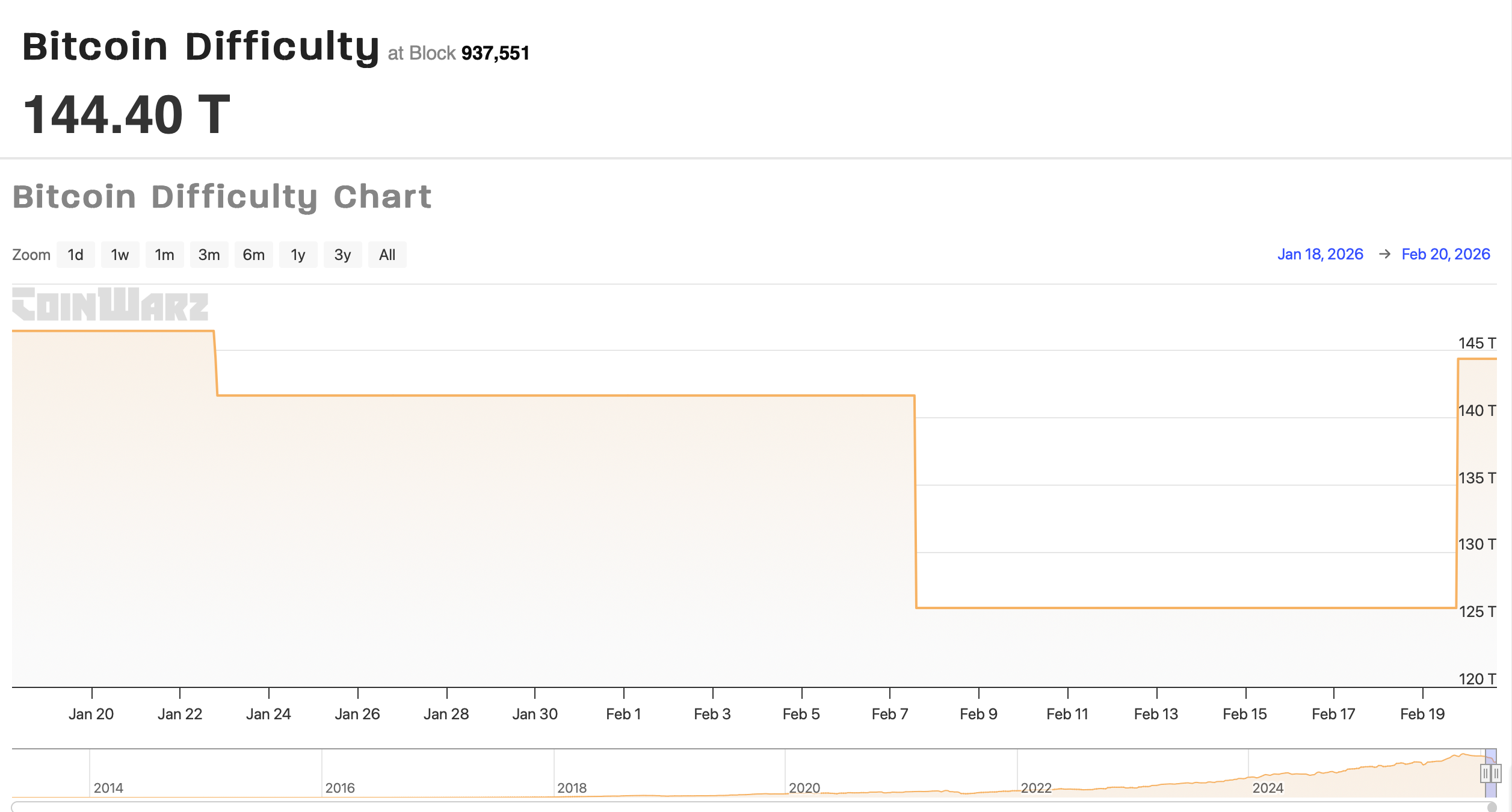
The Bitcoin network has demonstrated its inherent resilience once again, as evidenced by a substantial 15% increase in mining difficulty. This adjustment, which occurred on February 20th, signals a robust recovery in hash rate following disruptions caused by severe winter storms that impacted several regions in the United States. These storms temporarily knocked some of the largest mining operations offline, causing a significant dip in the overall computing power dedicated to securing the Bitcoin blockchain.

The Mechanics of Difficulty Adjustments
Bitcoin‘s mining difficulty is a crucial mechanism designed to ensure that new blocks are added to the blockchain at a consistent rate, approximately every ten minutes. This process involves a complex algorithm that automatically adjusts the difficulty level every 2,016 blocks, roughly every two weeks. When the hash rate, which represents the total computational power of the network, decreases, the difficulty decreases to maintain the block production target. Conversely, when the hash rate increases, the difficulty increases as well.
Impact on US Miners and the Network
The winter storms in January presented a challenging scenario for Bitcoin miners in the United States. Power outages and grid instability forced many mining operations to temporarily shut down. However, the subsequent rebound in hash rate and the resulting difficulty adjustment highlight the adaptive nature of the network. While the increase in difficulty strengthens network security, it also increases the computational effort required for miners to successfully mine a block and earn rewards. This can potentially tighten profit margins, especially for miners already facing high operational costs.
Miners Finding Creative Solutions
The article also highlights how some US-based miners are utilizing innovative strategies to mitigate the impact of weather-related disruptions. Some participate in demand response programs or hold flexible power contracts, allowing them to temporarily halt mining operations and sell excess electricity back to the grid when prices surge. This approach not only provides a financial buffer during downtime but also contributes to grid stability. For example, LM Funding America generated a substantial portion of their typical quarterly revenue by curtailing operations during the storm.
The Shifting Landscape of Bitcoin Mining
The United States has emerged as a dominant force in Bitcoin mining, particularly after China’s 2021 crackdown on crypto-related activities. US-based miners account for a significant portion of the global hash rate, with major operations concentrated in states known for their crypto-friendly policies. The recent events underscore the importance of geographical diversification and the ability of miners to adapt to unforeseen circumstances.
Looking Ahead
As the Bitcoin network continues to evolve, the ability of miners to adapt to environmental challenges and market dynamics will be crucial. The recent difficulty adjustment underscores the network’s capacity to bounce back and maintain its integrity. It also highlights the growing importance of operational flexibility and innovative strategies for miners in an increasingly competitive environment. This situation should be followed to track the ongoing evolution of the hash rate and its impact on the Bitcoin ecosystem.