Regulatory Scrutiny Intensifies: KuCoin EU Under Fire
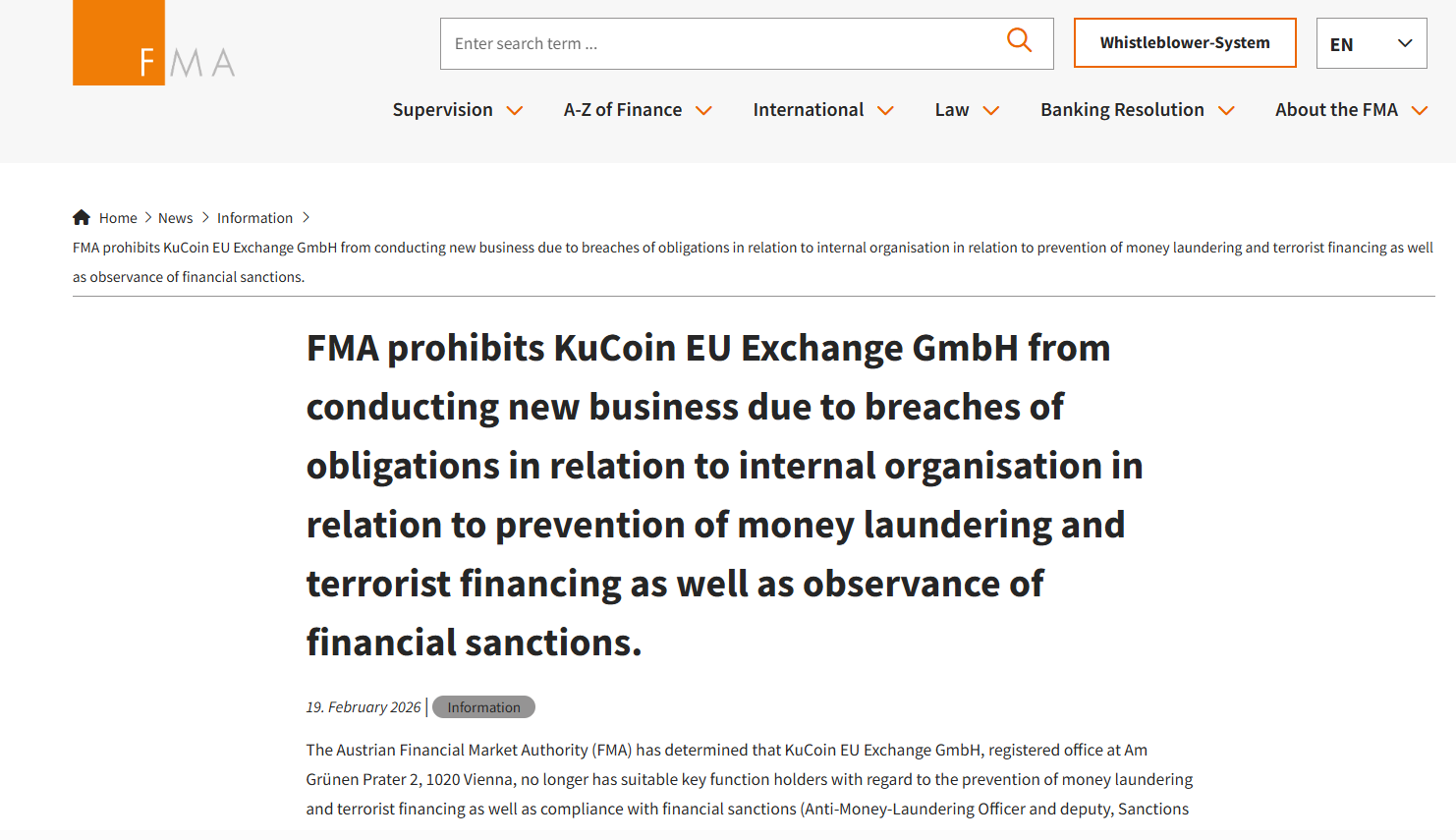
In a significant development, Austria’s Financial Market Authority (FMA) has imposed a temporary ban on KuCoin EU’s new business activities. This move comes just months after the exchange was granted a Markets in Crypto Assets Regulation (MiCA) license, which allows it to operate across the European Union and European Economic Area. The FMA‘s decision underscores the stringent regulatory environment crypto exchanges now face, particularly regarding Anti-Money Laundering (AML) and sanctions compliance.
Compliance Concerns Prompt Action
The FMA cited “gaps in key AML and sanctions roles” as the primary reason for the ban. Specifically, the regulator noted issues with internal organizational requirements related to AML, counter-terrorist financing, and adherence to financial sanctions. This has led to the directive preventing KuCoin EU from onboarding new customers or entering into new contracts until the identified compliance deficiencies are rectified. The situation highlights the importance of maintaining robust compliance teams and procedures, a critical aspect of operating within the regulated financial landscape.
KuCoin‘s Response and Remediation Efforts
Sabina Liu, managing director at KuCoin EU, acknowledged the departures of two key compliance professionals, attributing the situation to staff mobility, a common occurrence in any regulated industry. She emphasized that the exchange had already begun the process of recruiting replacements before the FMA notice and had voluntarily paused new user onboarding and certain trading activities. Liu also stated the matter was “contained and limited in scope,” suggesting minimal long-term impact on the exchange’s European strategy. The exchange has positioned Vienna as a central hub, illustrating a commitment to European regulatory standards.
The incident demonstrates the increasing emphasis on compliance within the crypto industry, particularly for those operating under MiCA regulations. The need for robust AML and sanctions procedures, as well as the importance of maintaining qualified personnel, are highlighted by this regulatory action.